Operation Cool: How to keep your motorhome cool this summer (without draining the battery)
Operation Cool: How to keep your motorhome cool this summer (without draining the battery)
Summer is finally here! And with it comes an endless desire to rack up the miles and make the most of the holidays. However, the summer months bring with them the season’s biggest challenge: battling the high temperatures inside the vehicle. We’ve all been there: coming back after a day at the beach or on an outing, opening the motorhome door and feeling as though we’re stepping straight into an oven.
Maintaining a comfortable temperature without constantly relying on a 220V power supply at a campsite is entirely possible if you know how. Today we bring you a comprehensive guide featuring professional tips and smart habits to help you beat the heat this summer.
1. The golden rule: Strategic guidance and the art of the shadow
Prevention starts before you switch off the engine. When you reach your destination (whether it’s a motorhome site, a campsite or a designated overnight stop), take a couple of minutes to check the sun’s path.
- Make the fridge a priority: Try to position the side of the vehicle where the fridge’s ventilation grille is located so that it faces north or is in as much shade as possible. If the fridge is exposed to direct sunlight at 2 pm, its performance will plummet and it will consume much more energy (or gas).
- Make the most of your surroundings: Parking under deciduous trees is ideal, but watch out for sap and low-hanging branches. If there is no natural shade, position the vehicle so that the rear (which is usually better insulated and has fewer windows than the cabin) is exposed to direct afternoon sun.
2. Heat shields: Block heat before it gets in
The most common mistake is trying to cool the car interior once the heat has already got in. The key lies in the exterior insulation.
- Sunshades and outdoor structures: Window shades fitted inside the cabin do help, but they create a ‘magnifying glass effect’ because the sun’s rays have already passed through the windscreen. External sunshades are far more effective: they block the heat before it reaches the glass and can reduce the interior temperature by up to 7 °C.
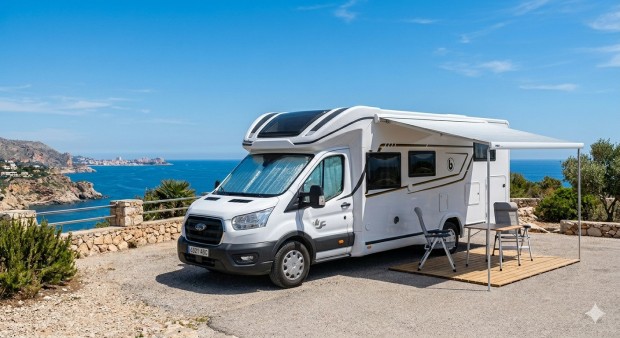
- The awning, your best friend: Don’t hesitate to put up the awning (provided local regulations allow it) to create a shade barrier along the side of the motorhome. This prevents the walls of the living area from absorbing heat through continuous radiation.
3. Cross-ventilation and the 'chimney effect'
Opening the windows at midday is a sure-fire way to let scorching hot air into your home. Ventilation needs to be strategic.
- The chimney effect trick: Hot air tends to rise, as per the basic laws of physics. To let it out, open the roof vents a few centimetres and try to open the lower windows on the shaded side of the vehicle. This allows cool air to enter from below and pushes the hot air out through the roof, creating a continuous natural draught.
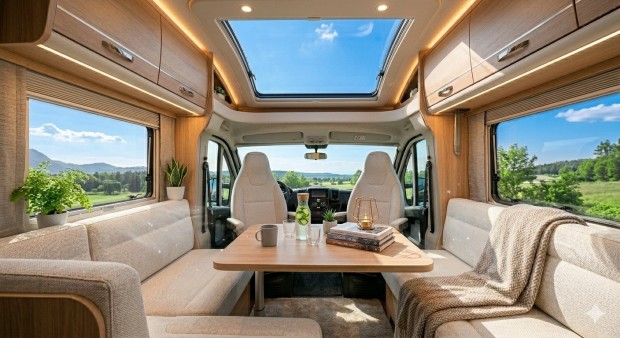
- Night-time ventilation: Make the most of the early hours of the morning to open the vehicle fully (with the mosquito nets down) and let the air circulate inside.
4. Efficient climate control: air conditioning or a chiller?
If you’re planning to invest in an air-conditioning system, you should be aware of the differences between them so you don’t face any unpleasant surprises when it comes to energy consumption:
- Evaporative coolers (Viesa, Neil, etc.): They run on 12V and use very little power, making them perfect for use on the road or when wild camping with an auxiliary battery. The secret lies in the fact that they humidify the air using a water filter, thereby lowering the ambient temperature. For them to work properly, you must leave a window ajar by a couple of centimetres, as they need to circulate the air and prevent the room from becoming too humid.
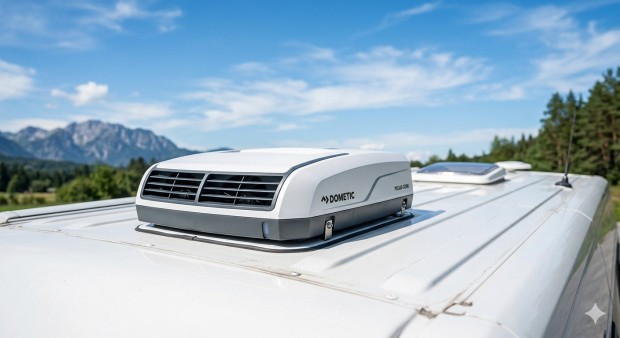
Traditional air conditioners: They are incredibly powerful, but they use so much power that they usually need to be plugged into a 220V socket when camping (unless you have a high-capacity lithium battery system with a powerful inverter). If you’re at a campsite, switch it on a couple of hours before going to bed at a sensible temperature (24 °C) to warm up the walls and mattresses, rather than running it at full power all day long.
With these tips and a bit of campervan ingenuity, your home on wheels will become the perfect oasis after a day of adventures in the sun.
Have a great summer and enjoy the ride!